
Hand-held Snake Game
For this assignment you are limited to the inputs and outputs that we have discussed in class: LEDs, buttons, knobs, pressure and light sensors, and generated sound. The world of possible inputs and outputs is nearly infinite, and we will have time to experiment, but for this first project you need to restrict your ideas to these.
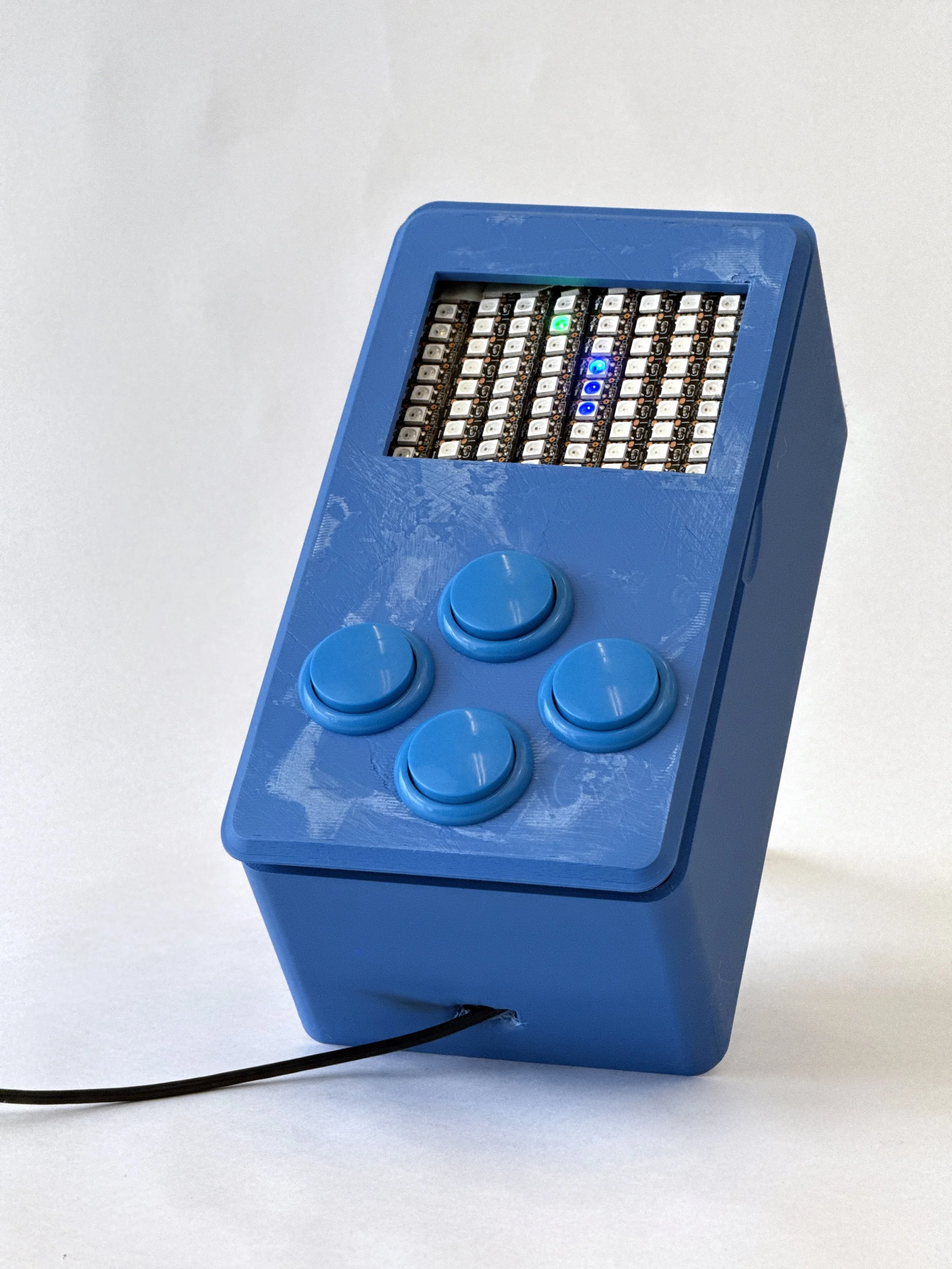
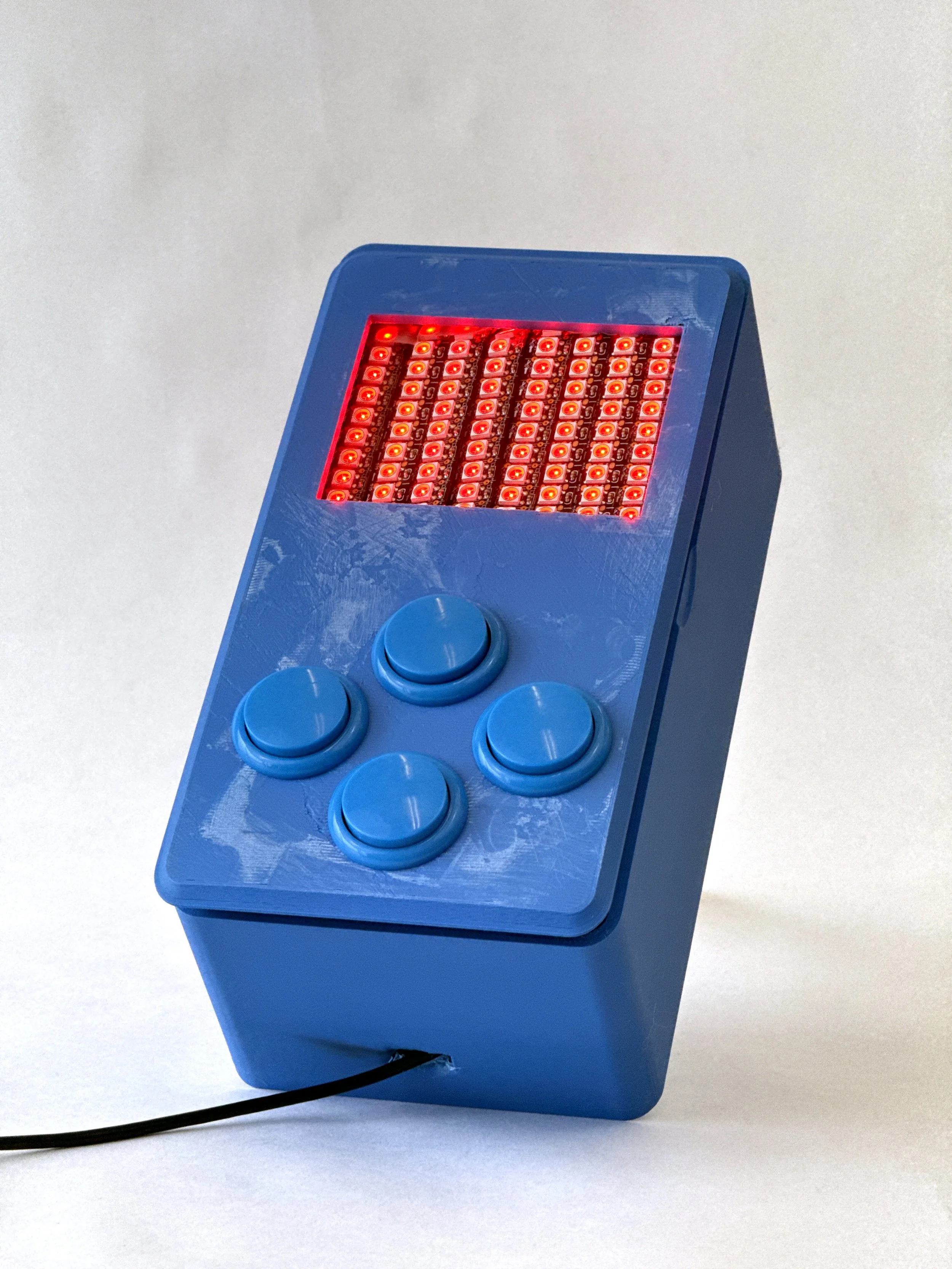
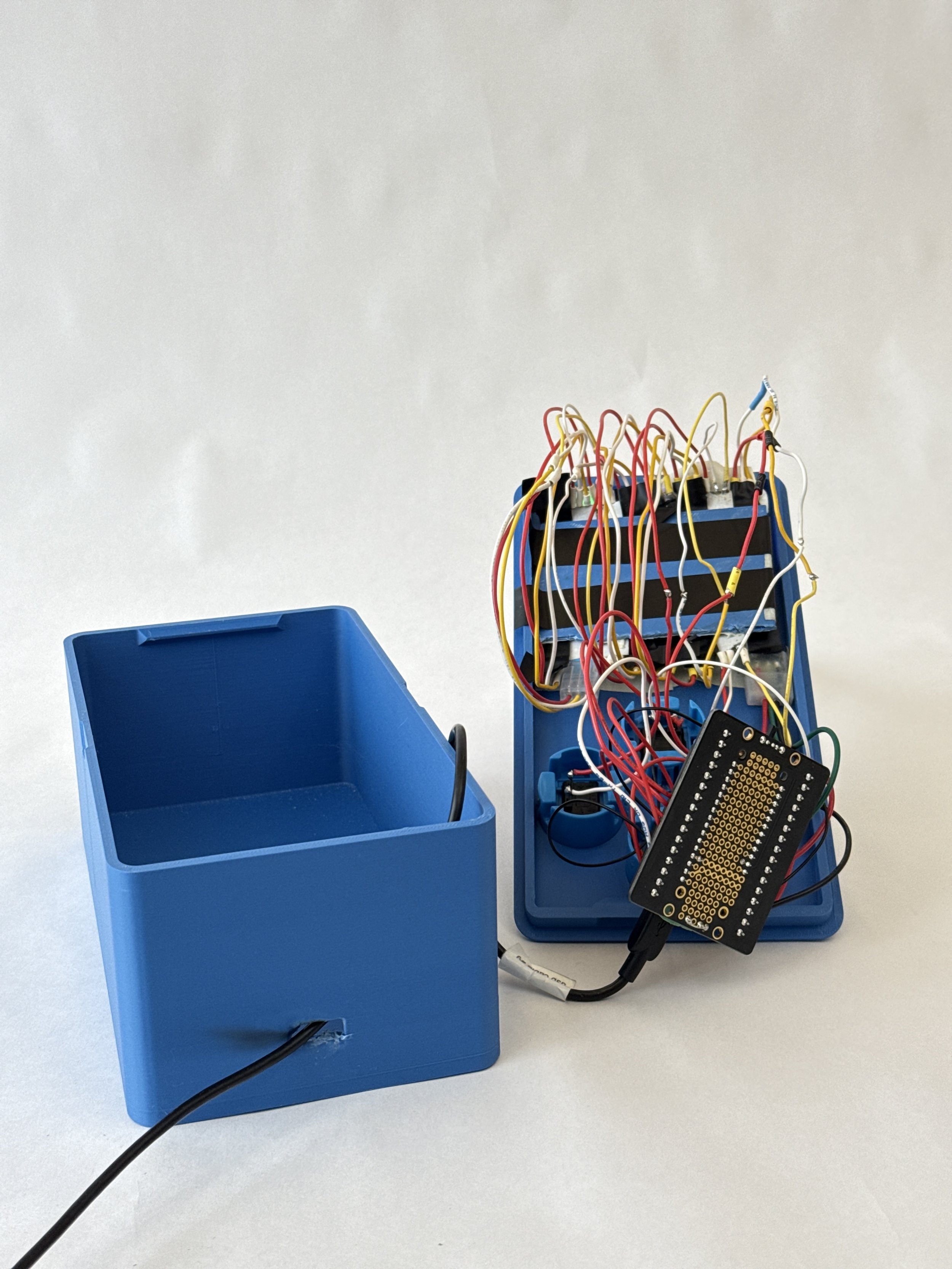
Using LEDs and tactile buttons, I built a fully hand-held Snake game from scratch. To create the “screen,” I deconstructed a long LED strip, cutting and individually soldering each segment together to form a custom matrix. Because the contact points on each LED were extremely small, maintaining stable connections required precision and repeated troubleshooting to ensure durability and functionality.
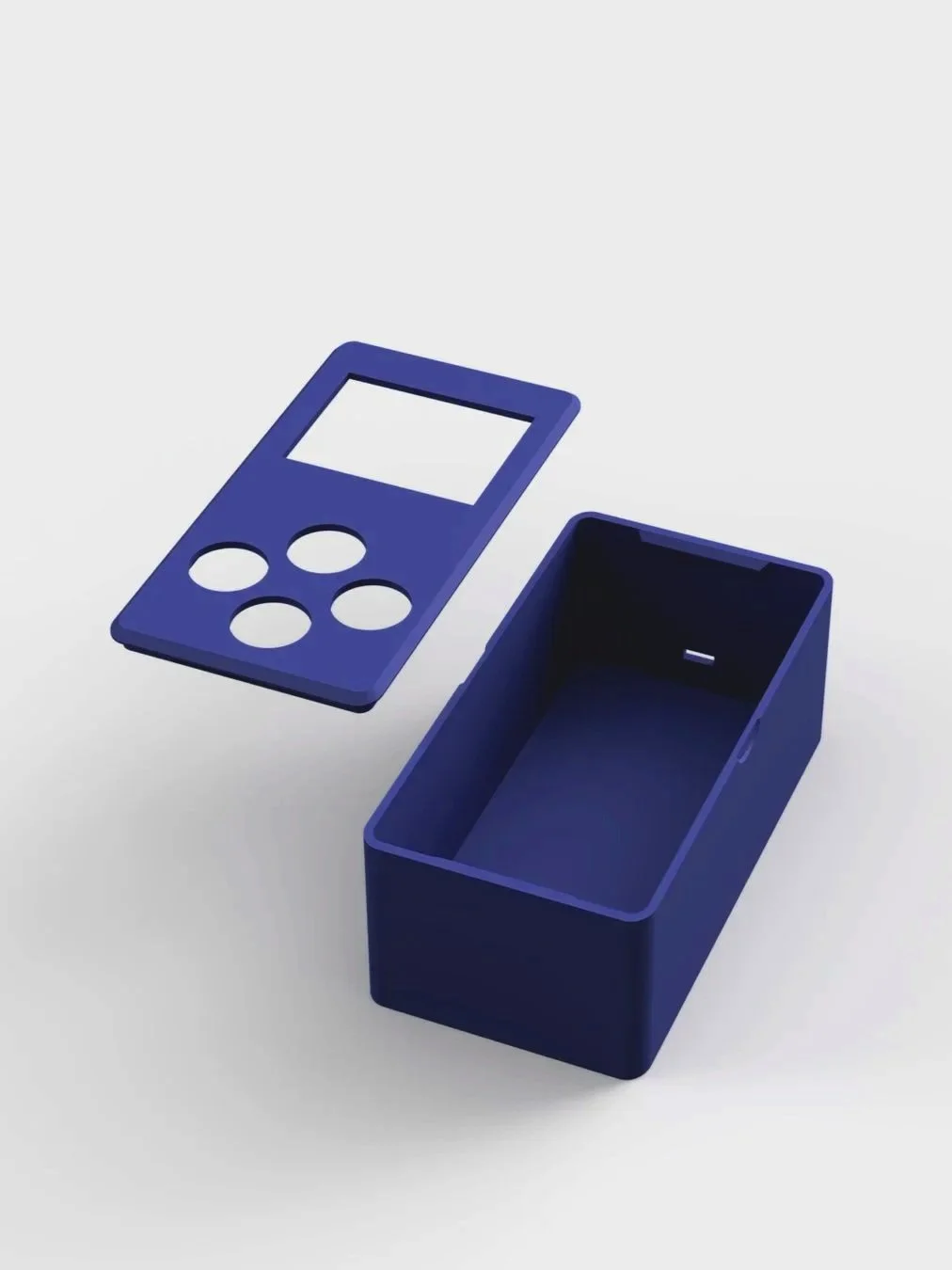
I also designed and 3D printed a custom enclosure tailored to the exact dimensions of the LED matrix and control buttons. The case features a secure snap-fit design that minimizes internal movement and protects the wiring while remaining accessible for adjustments.
On the software side, I programmed the game using an Arduino Feather, debugging alignment and mapping challenges to ensure the LEDs moved cleanly in straight horizontal and vertical paths. This required recalculating LED indexing and restructuring the logic to accommodate the physical layout of the matrix. This project combines hardware fabrication, enclosure design, and embedded programming into a fully interactive game system.
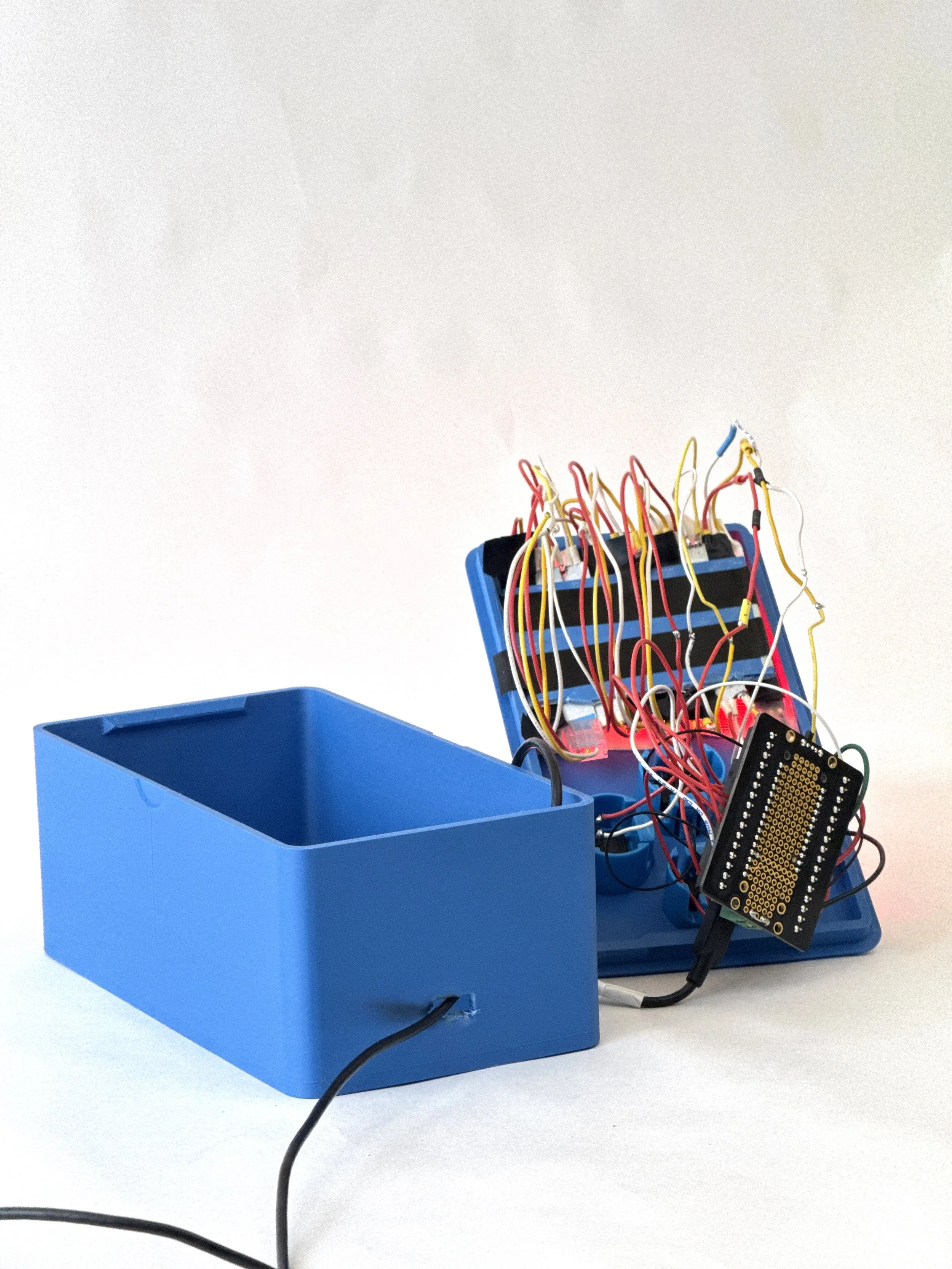
Snap-fit design
Individually soldered wires